Website redesign:
modernise while protecting your rankings
Your website should explain your offer more clearly and help visitors take action without losing the pages that already make you visible. We bring design, development and SEO migration together in one redesign project.
We start with your current site: useful pages, content, journeys and search data. Then we prepare the new version, the redirects it needs and the checks after launch. The scope and monitoring period are agreed with you.
PROJECTS YOU CAN EXPLORE
Work we have actually built.
A redesign should preserve what is useful while improving the experience. Reflectiv shows an e-commerce migration; Chrysalab and Services Vin show two other journeys our team can build and evolve.
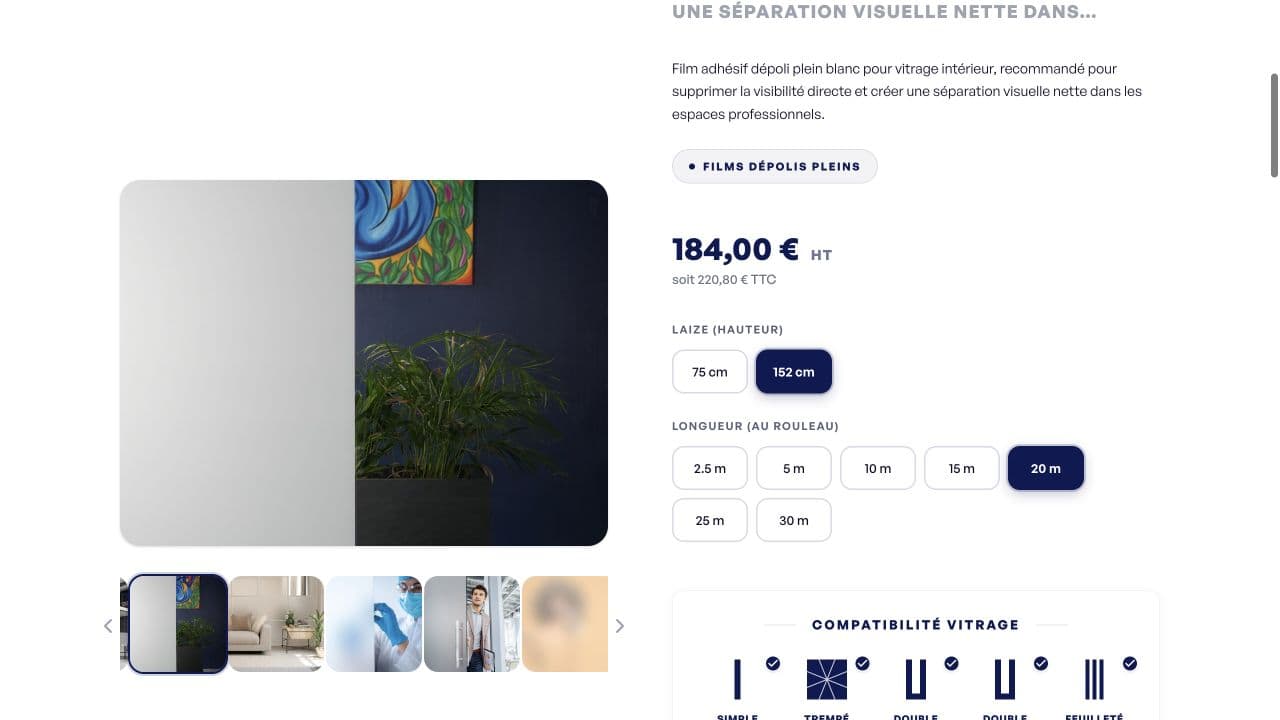
E-commerce redesign
Reflectiv
Migration from PrestaShop to a Next.js and Symfony platform with a multilingual catalogue and professional customer area. Product pages let buyers choose width and length before ordering.
Explore the case study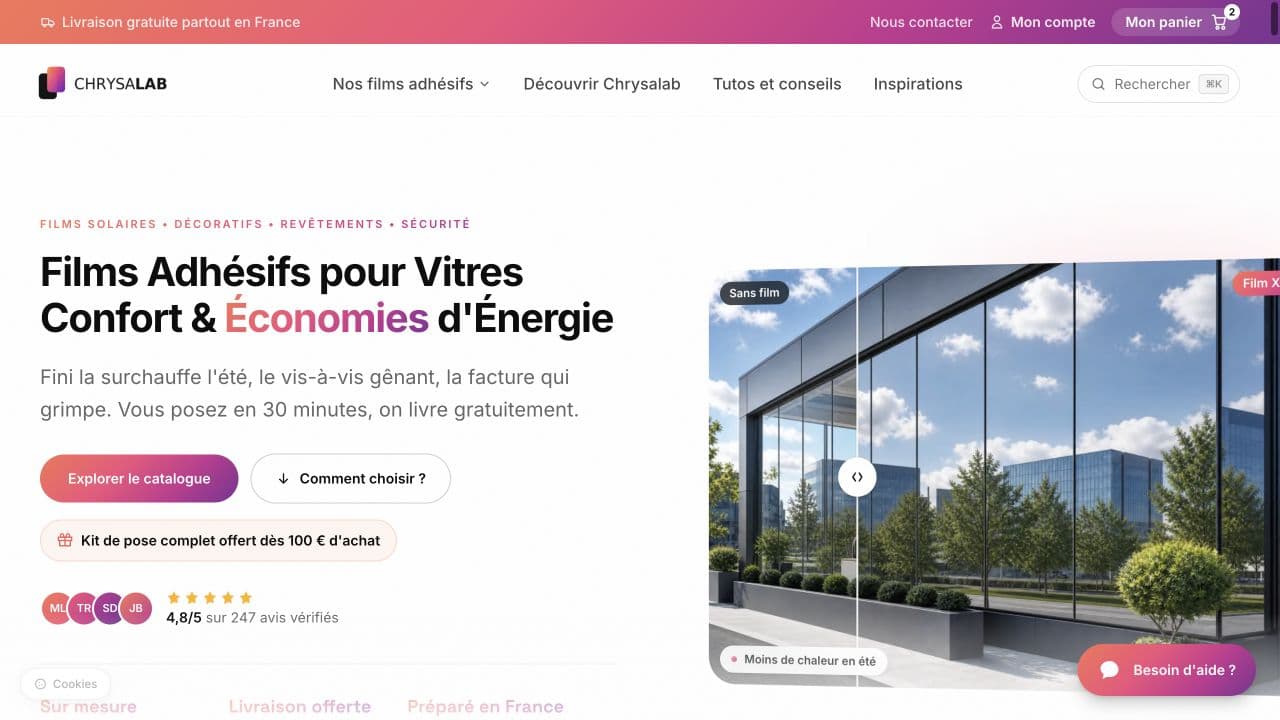
Purchase journey
Chrysalab
An adhesive film catalogue where buyers can choose a roll, a cut length or made-to-measure dimensions, with a price for the selected format.
View the case study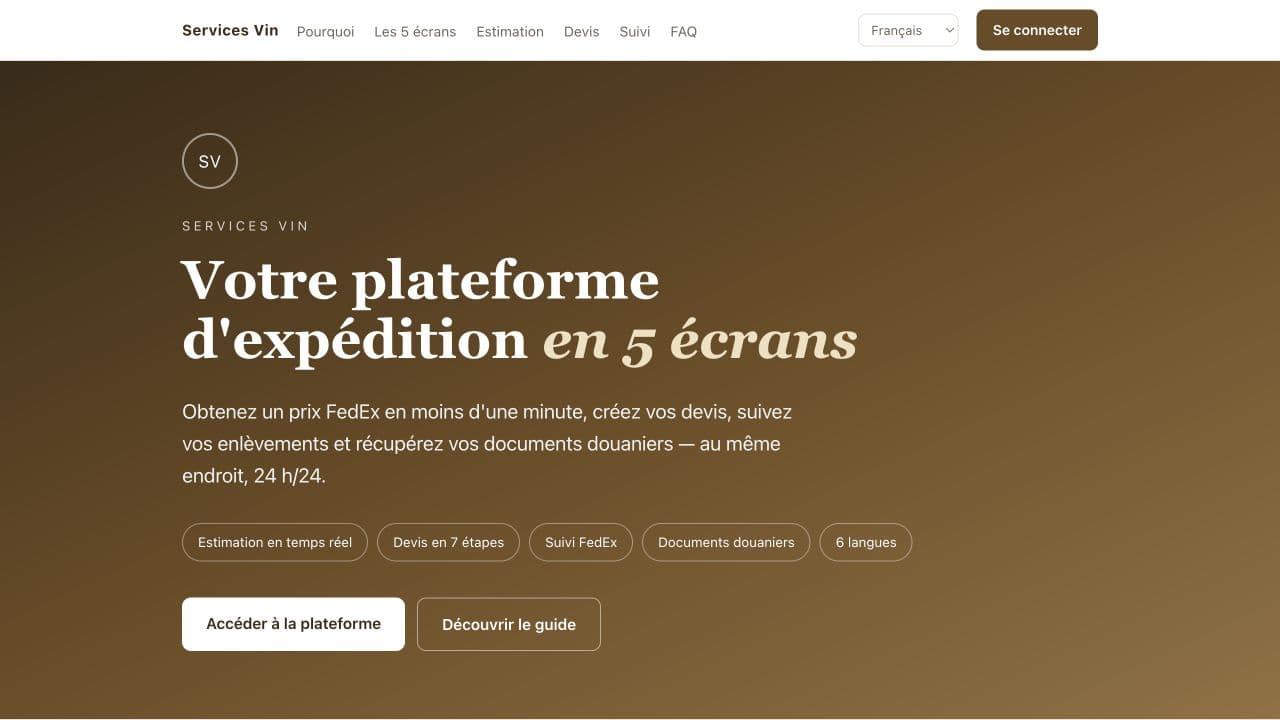
Business application
Services Vin
A shipping platform that evolves with its users: a documented address-search update and a public guide to help clients use the application.
Explore the business exampleThree projects, three challenges: evolving an existing site, making online purchases easier and building a business tool.
Let's review what your site should keepWhat a website
redesign covers
From understanding your current site to checking the new one after launch: these are the workstreams we scope for your project.
Audit of what exists
We identify pages that bring visits or enquiries, the related queries, content worth keeping and technical limits. This baseline lets us compare before and after.
URL mapping and redirects
We inventory existing URLs and decide which page to keep, where a relevant redirect should lead or when removal is justified. Redirects are planned before launch.
Design and user journeys
We clarify your offer, navigation and paths to an enquiry or purchase, using observed behaviour and your business goals.
Content migration
Text, images, articles and product pages are reviewed: some stay, while others are improved, merged or removed according to their value. Their SEO context is checked.
Engineering and performance
Platform choice, speed, mobile rendering, markup and accessibility are handled alongside design, not added at the end of the project.
Post launch monitoring
After launch, we check crawling, indexing, errors and important pages. The monitoring period and actions are agreed during scoping.
Website redesign with
Synerium Agency
As a website redesign agency, Synerium offers two ways to run the project: a defined scope or continuous evolution. The audit, migration and post-launch monitoring are agreed before work starts, with deliverables, responsibilities and support duration suited to the chosen plan.
Infinity subscription
Progressive redesign, template by template, with an Infinity plan that includes development. Requests can be added over time; delivery depends on the included departments, priorities and the plan's production capacity. Each stage's scope and timeframe are agreed before work starts.
- Progressive deliveries based on agreed priorities
- Fixes and improvements within the plan's capacity
Best for an active site that already generates traffic or revenue.
Learn moreStudio package
A scoped redesign with setup fees and monthly payments over 36 months. Maintenance is included; content and improvements use the plan's credits. See Studio for current prices and conditions, then agree the project's scope and schedule.
- Scope, milestones and launch date defined up front
- Maintenance included; content and improvements use credits
Best for a platform migration, a rebrand or a fixed launch date.
Learn moreA redesign also needs a search migration plan
A better-looking site is not enough to make a redesign successful. The project also needs to preserve useful pages, their content and the journeys that help visitors find and contact you.
When addresses change without relevant redirects, visitors and search engines can reach an error instead of the expected content. Changes to copy, internal links or rendering can also affect a site's visibility.
Before launch, we match old addresses to their new destinations and identify pages to retain, redirect or remove. Pages with visits, inbound links or a business purpose need particular attention.
This work starts during scoping, alongside design and development. After launch, monitoring helps detect errors and investigate changes in visibility without confusing correlation with causation.
Rendering also matters: scripts, styles and images needed by search engines must remain accessible. Our crawl analysis case study explains how to interpret requests by resource type without confusing them with the number of pages actually crawled.
Plan post-launch supportas part of the redesign.
Redesign or rebuild: how to decide
The right approach depends on what the site already contributes: visibility, enquiries, content, links and business uses. We check that before suggesting a full rebuild.
If certain pages attract qualified visitors or earn links, they are an asset worth preserving. A redesign can change the design, journeys and technology while planning continuity for useful content and URLs.
If the existing structure no longer supports the business, a new website on a fresh foundation may make more sense. Even then, we review old URLs, content and links: a new design is not a reason to ignore the domain's history.
A phased approach is also possible: improve selected templates or journeys first, where the platform allows it. We agree priorities and checks for each step before choosing between a single launch and a gradual redesign.
For Reflectiv’s e-commerce redesign, we migrated PrestaShop to a Next.js and Symfony architecture, with a professional customer area and a multilingual catalogue. The case study presents the features delivered and the technical and editorial work completed.
Six signs a redesign is overdue
These signs call for a closer look at the site. They do not automatically mean it all needs rebuilding.
The site cannot be edited without a developer
When every copy change depends on a supplier, information can fall behind the business. Editorial independence may be worth reconsidering.
Mobile performance is blocking conversion
If most of your visitors use a phone, check the speed and clarity of key pages before deciding to rebuild the whole site.
Organic traffic has been falling for months
A sustained decline may come from content, competition, a technical issue or changing demand. We investigate the cause before choosing a solution.
The technology is no longer maintained
An abandoned CMS, a plugin that stopped receiving updates, a PHP version at end of life. That is no longer a comfort issue, it is a security issue.
The site no longer says what you do
Your offer has evolved, but the website still presents the old one. Visitors may no longer understand what you can do for them today.
Every change costs a quote
When every change needs a new quote, useful improvements can be delayed. The way the site will evolve after the redesign may need attention too.
What a redesign can improve, and what else needs work
A new site can remove technical friction and clarify journeys. Generating enquiries also depends on your offer, content and distribution.
Address during the redesign
Engineering
- Load time and Core Web Vitals
- End of life platform
- Known security holes
- Semantic markup and structured data
- Accessibility
Search
- URL architecture
- Duplicate and competing pages
- Broken internal linking
- Redirect chains piled up over the years
- Sitemap and crawlability
Conversion
- Confusing journeys
- Forms that ask for too much
- Missing or buried calls to action
- Mobile rendering
- Information hierarchy
Work on alongside it
Positioning
- Explain who each offer is for
- Make pricing or the quoting process clear
- Express a benefit your clients recognise
Content
- Plan the text, images and proof the site needs
- Update important pages after launch
- Answer prospective clients' questions
Acquisition
- Earn relevant links and mentions
- Connect content to valuable searches
- Measure enquiries from search and campaigns
Our redesign method,
step by step
Six steps, with deliverables and approvals agreed during scoping.
Audit and baseline
We record rankings, pages that bring traffic or enquiries, inbound links, technical errors and content. This baseline lets us compare results after the redesign.
URL mapping
Old addresses are matched to future pages. Depending on the case, we keep the URL, plan a redirect to equivalent content or document its removal.
Structure and design
Architecture, journeys and mockups are designed around your offer, the pages visitors use and the friction we identify. You approve the direction before development.
Build and migration
Integration, development, content transfer. The new site is built on a separate environment, with visible deliveries along the way rather than a final reveal.
Switch and verification
We prepare the launch, activate and check redirects, and verify important pages and the sitemap. We then examine what visitors and search engines can access.
Monitoring and fixes
Indexing, crawl errors and rankings are tracked in the weeks that follow. A redesign always produces surprises: what matters is seeing them early.
Protect your visibility, in Google and in AI answers
An SEO redesign is not only about retaining rankings. It must preserve useful URLs, internal links, structured data, evidence and the content that helps search engines understand your expertise.
Important information should also be easy to find and verify: what you offer, who it is for and which projects show your work. That helps visitors as well as tools that generate answers with AI.
Can a redesign protect SEO and visibility in AI search?
That is the aim of the migration plan: keep useful URLs or redirect them to relevant equivalents, preserve content and its context, then check internal links and markup. These precautions limit risks, without guaranteeing that every ranking or citation in AI answers will be retained.
Before the redesign
Inventory of URLs, queries, inbound links, cited content, brand entities and structured data that must be preserved.
During the migration
301 redirects, canonicals, internal links, editorial hierarchy and JSON-LD schemas are checked together.
After launch
Indexing, crawling, rankings, errors and the visibility of strategic content are monitored and corrected.
Why trust your redesign to Synerium
Redesigning a site means moving something that already partly works. The difficulty is not doing better, it is not breaking what already worked.
Search and design move forward together from the start
URL mapping and the redirect plan are prepared at the start of the project. They help anticipate address changes and organise checks before and after launch, without guaranteeing that every ranking will be retained.
You watch the site take shape, not a final reveal
The new site is built on a staging environment you can open at any time. You follow, comment and adjust during the build rather than discovering it and asking for fixes afterwards.
The project does not stop at the switch
Post-launch support is agreed during scoping. With Infinity, fixes and optimisation requests are handled according to the included departments and the plan's capacity. With Studio, maintenance is included; content and improvements use the allocated credits.
Does a redesign lose your search rankings?
A redesign can lead to ranking fluctuations: changed URLs, removed content, altered internal links or access issues can contribute. We prepare an inventory of the existing site, redirects to equivalent pages and checks before and after launch to limit these risks. No method guarantees that every ranking will be retained.
How long does a website redesign take?
The schedule depends on page count, content migration, integrations, available access and approvals. It is agreed during scoping. With an Infinity plan that includes development, the redesign can progress template by template according to priorities and production capacity; the timeframe for each delivery is confirmed based on its scope.
How much does a website redesign cost?
The budget depends on the scope and chosen plan. Studio includes setup fees followed by monthly payments over 36 months; current prices and conditions are shown on the Studio page. With Infinity, a redesign requires a plan that includes development and remains subject to its included departments and production capacity. See the Infinity page for current prices and commitments. Scope, any third-party costs and conditions are approved before work starts.
Does all the content have to be rewritten?
Not necessarily. We assess what each page contributes: qualified visits, enquiries, links and information clients need. Some pages should be kept or improved; others may be consolidated or rewritten. We make that decision after reviewing the site, not just its appearance.
Can we keep the same domain name?
Yes, and that is the usual case. The domain carries the age and the inbound links: there is no reason to change it unless the brand changes. If a domain change is necessary, it is handled with a complete redirect plan and a period of close monitoring.
What happens to external links pointing at the old site?
When an old address changes, we redirect it to the most relevant new page. Visitors following those links can then find the content they expected. We also check important links after launch, because a missing or poorly targeted redirect can cost visits and search signals.
Can a site be redesigned without going offline?
The new site can be prepared on a separate environment to limit the impact on the public site. The switch is planned, and any necessary interruptions are reviewed before launch. A progressive redesign can also replace templates in stages when the technical foundation allows it, without guaranteeing uninterrupted availability.
Redesign or full rebuild: how do we know?
We first assess the current site: useful pages, traffic, links, content and technical constraints. It may make sense to keep part of the existing foundation, rebuild it or start on a new one. Either way, URLs and content with value are accounted for in the launch plan.
Do you work with every technology?
We redesign WordPress, WooCommerce, PrestaShop, Shopify, Webflow and Wix sites as well as custom builds, moving to WordPress, Shopify or a Next.js base depending on the need. The target depends on who will run the site day to day and how specific the business logic is, not on our preferences.
How long before the old rankings come back?
There is no guaranteed timeframe. It depends in part on the size of the site, changes to content and structure, and the time Google needs to recrawl the pages. We compare indexing, errors, landing pages and queries before and after launch. A lasting decline needs investigation rather than automatically being attributed to redirects alone.
What happens after launch?
The scope and duration of support are agreed during scoping: indexing checks, crawl errors, rankings and identified fixes. With Infinity, subsequent requests depend on the included departments and the plan's production capacity. With Studio, maintenance is included; content and improvements use the allocated credits. Any out-of-scope request is scoped separately before work starts.
Can the redesign be done in stages rather than all at once?
Yes, when the technical foundation allows it. We can improve selected templates or journeys first, then observe how they work before continuing. URLs are kept where that makes sense; changed ones are handled in the redirect plan. We agree the method and schedule during scoping.